
What Is Foodborne Illness?
Foodborne illness is a preventable public health challenge that causes an estimated 48 million illnesses and 3,000 deaths each year in the United States. It is an illness that comes from eating contaminated food. Consuming dangerous foodborne bacteria will usually cause illness within 1 to 3 days of eating the contaminated food. The onset of symptoms often presents itself as flu-like symptoms, as the ill person may experience symptoms such as nausea, vomiting, diarrhea, or fever. Because the symptoms are often flu-like, many people may not recognize that the illness is caused by harmful bacteria or other pathogens in food. Food- or waterborne illnesses are not spread from casual contact with another person. A person can come into contact with food- or waterborne bacteria by eating or drinking something that has bacteria in it. https://www.fsis.usda.gov/food-safety/foodborne-illness-and-disease
Some people are more likely to get a foodborne illness than others. Those people include:
- People aged 65 and older
- Children under age 5
- People with a weakened immune system
- People who are pregnant
The most common types of bacteria and viruses that cause illnesses in the United States are included on the list below. Click on each bacteria or virus to find out more about it at FoodSafety.gov.
- Campylobacter
- Clostridium perfringens
- E. coli
- Listeria
- Norovirus
- Salmonella
- Bacillus cereus
- Botulism
- Hepatitis A
- Shigella
- Staphylococcus aureus (Staphylococcal [Staph] Food Poisoning)
- Vibrio Species Causing Vibriosis
How can I Prevent Foodborne Illness?
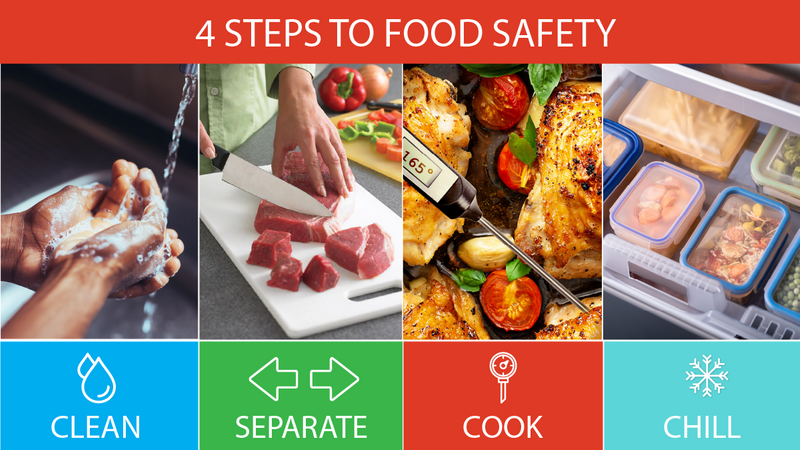
Clean:
- Wash your hands for at least 20 seconds with soap and warm or cold water before, during, and after preparing food and before eating.
- Wash your utensils, cutting boards, and countertops with hot, soapy water after preparing each food item.
- Rinse fresh fruits and veggies under running water, but don't wash chicken. Raw chicken is ready to cook without washing, and washing it may spread germs to other foods, the sink, or the counter.
Separate:
- Keep raw meat, poultry, and seafood, along with their juices, away from other food, whether it's in the grocery cart, refrigerator, or cooler.
- Use one cutting board or plate for raw meat, poultry, or seafood, and then a separate cutting board or plate for produce, bread, and other foods that won't be cooked.
Cook:
- Thoroughly cook foods to kill harmful bacteria. If you eat meat, poultry, fish, oysters, or eggs that are raw or only partially cooked, you may be exposing yourself to bacteria that can make you ill.
- Use a food thermometer to ensure foods are cooked to a safe internal temperature. If you have used the food thermometer and the food is still not up to temperature, make sure to clean the thermometer before checking again.
- Use this chart to find out the safe temperature for cooked foods: Food Safety Minimum Temperatures.
- When reheating, use a food thermometer to make sure that the microwaved food reaches 165°F. Never thaw frozen food on the counter, but use cold water, a refrigerator, or the microwave instead.
Chill:
- Divide large amounts of leftovers into several small, shallow containers for quick cooling in the refrigerator. Be careful not to pack the refrigerator too tightly, as cool air must be able to circulate to keep food safe.
- Bacteria can multiply rapidly if left at room temperature or in the "Danger Zone" between 40°F and 140°F. Never leave perishable food out for more than 2 hours (or 1 hour if exposed to temperatures above 90°F). (https://www.cdc.gov/food-safety/prevention/index.html)
How will I know if my food gets recalled?
You can check for recalls here: USDA Food Recalls.
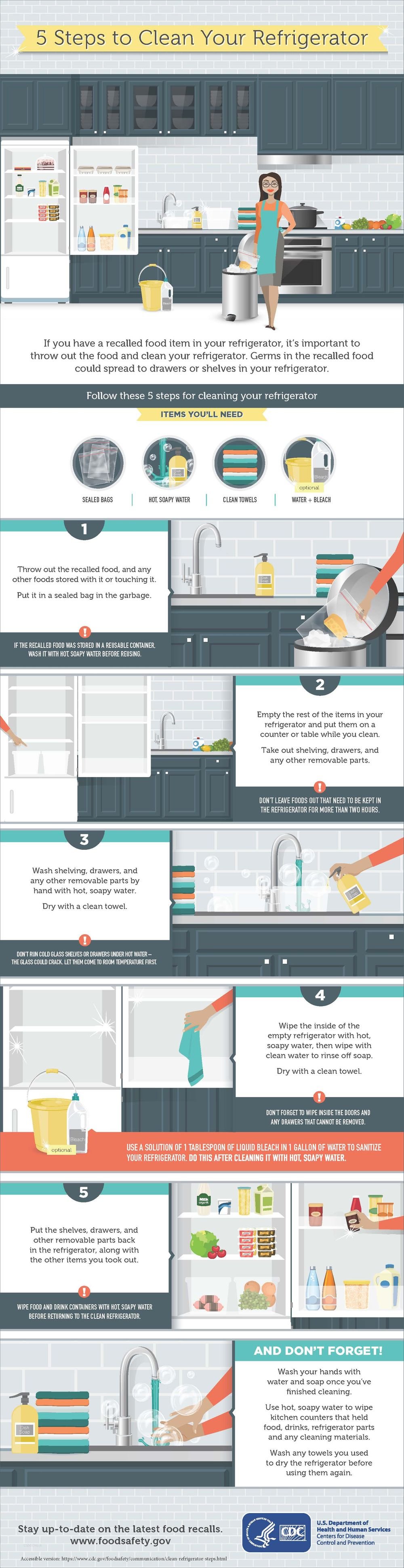
And if your food does get recalled, don't forget to clean your refrigerator by followin these steps: